
|
|
ICONS WITH GREATER PAINTED AREA
But even in early Byzantine times (e.g., 4th century), oklad covers became elaborated to enhance and focus attention on the icon painting underneath.
One way to do so was enlarge the number and extent of openings in the oklad cover.
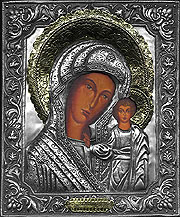
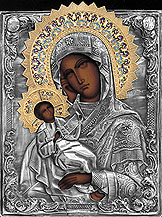
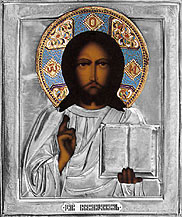
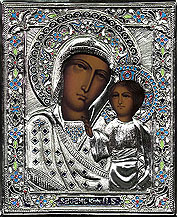
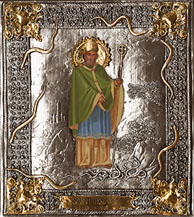
On this page, we concentrate on icons that have a relatively larger area devoted to the painting underneath.
It should be noted that, consistent with post-1700 icon production methods in Russia, the painted surface extends only slightly beyond the oklad opening. This resulted from the need to produce many icons for the Russian home market. For these icons, the oklad covers were permanently attached (in contrast to icons in the Church which would normally have a fully painted surface underneath with a removable oklad).
The selection and ranking of icons included below was based on a combination of proportion of painted area as well as absolute size of icon and painted area.
|

|
using account: 

|